an archaeology of worlds known & unknown, seen & unseen
Search
About the Flaneur
I walk through my blindness the way I saunter down streets in Paris: unfettered and alive, ever delighted by the raw material of the senses. Come along with me. Just don’t try to take my arm unless I ask. What’s a flaneur? Read the first post, Return of the Flaneur to Galerie Vivienne. After that, try Foot Rage and the Blind Flaneur. Then stay tuned.
Brendan the Navigator
"Brendan, this is what the world looks like all the time to me. Just a little fog. It’s a fine day for boating on the Great Lakes.” Without missing a stroke he turned to dart a skeptical glance at me. Brendan the Navigator. When we named him I didn’t tell his mother everything the legendary Irish name implied. But I imagined him taking on the role of navigator for me. Growing up with Coastal Survey charts and tales of Great Lakes shipwrecks, he came to know Superior as another home. He never doubted the wisdom of canoeing there with a father who was half blind. Read more.
Essays: Not This Pig
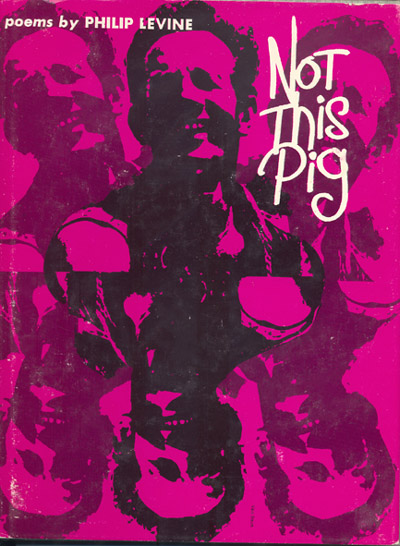
If there is an emerging genetic underclass, I could run for class president or class clown. Read more in Not This Pig (2003).
When I figured out who Charlotte Casiraghi was, I realized that I once sent a poem to her mother. Read more. What was it Delacroix said? “To be a poet and twenty is to be twenty. To be a poet and forty is to be a poet.” Delacroix didn’t take the trope beyond fifty, so he’s no guide in guessing my next state of being. For now, a red dress takes me back to the poetry of my misspent youth.
Poet and street artist Miss Tic isn't exactly a kid in a hoodie with a can of spray paint. Maybe she can still run like hell when the police show up, but can she sprint in high heels? Well-known in international avant-garde circles, her work is exhibited now at the Venice Biennale as well as the alleys of Paris. Read more. See Ethics of Love for a video montage of Miss Tic's provacative poetry. More Paris Street Art.
“In the digital age, every single thing we do with creative work on a digital network creates a copy,” Lawrence Lessig said in an NPR Fresh Air interview last month. “The act of reading on a digital network produces a copy.”
law professor Lawrence Lessig explores the changing landscape of intellectual property in the digital age — and argues that antiquated copyright laws should be updated.
Lessig is a columnist for Wired and the chair of Creative Commons, a nonprofit organization that promotes the legal sharing, repurposing and remixing of creative work.
The Media in Transition 6 conference (MiT6) at the Massachusetts Institute of Technology is scheduled for April 24-26, 2009. The conference theme is “Stone and Papyrus, Storage and Transmission.” The deadline for submitting proposals is January 9, 2009.
Ms. Modigliani and I went to MiT5 in 2007, and we found it to be one of the most engaging, thought-provoking conferences we’ve done. With her help I made peace with PowerPoint (a great leap of faith for a blind flaneur) and used it to present Curiosity & The Blind Photographer. It was my goal last year to talk about re-imagining accessibility at a conference, that was not devoted to disability, and MiT5 was the venue. Mine was the only talk there with a disability perspective. Media in Transition needs more disability perspectives. I hope my friends and readers will consider it. Here is the Call for Papers:
In his seminal essay The Bias of Communication, Harold Innis distinguishes between time-based and space-based media. Time-based media such as stone or clay, Innis agues, can be seen as durable, while space-based media such as paper or papyrus can be understood as portable, more fragile than stone but more powerful because capable of transmission, diffusion, connections across space. Speculating on this distinction, Innis develops an account of civilization grounded in the ways in which media forms shape trade, religion, government, economic and social structures, and the arts. [See Marshall Soules' 1996 essay on Harold Innis]
Our current era of prolonged and profound transition is surely as media-driven as the historical cultures Innis describes. His division between the durable and the portable is perhaps problematic in the age of the computer, but similar tensions define our contemporary situation. Digital communications have increased exponentially the speed with which information circulates. Moore’s Law continues to hold, and with it a doubling of memory capacity every two years; we are poised to reach transmission speeds of 100 terabits per second, or something akin to transmitting the entire printed contents of the Library of Congress in under five seconds.
Such developments are simultaneously exhilarating and terrifying. They profoundly challenge efforts to maintain access to the vast printed and audio-visual inheritance of analog culture as well as efforts to understand and preserve the immense, enlarging universe of text, image and sound available in cyberspace.
What are the implications of these trends for historians who seek to understand the place of media in our own culture?
What challenges confront librarians and archivists who must supervise the migration of print culture to digital formats and who must also find ways to preserve and catalogue the vast and increasing range of words and images generated by new technologies?
How are shifts in distribution and circulation affecting the stories we tell, the art we produce, the social structures and policies we construct?
What are the implications of this tension between storage and transmission for education, for individual and national identities, for notions of what is public and what is private?
We invite papers from scholars, journalists, media creators, teachers, writers and visual artists on these broad themes. Potential topics might include:
* The digital archive
* The future of libraries and museums
* The past and future of the book
* Mobile media
* Historical systems of communication
* Media in the developing world
* Social networks
* Mapping media flows
* Approaches to media history
* Education and the changing media environment
* New forms of storytelling and expression
* Location-based entertainment
* Hyperlocal media and civic engagement
* New modes of circulation and distribution
* The transformation of television — from broadcast to download
* Cosmopolitanism backlashes against media change
* Virtual worlds and digital tourism
* The continuity principle: what endures or resists digital transformation?
* The fate of reading
Pierre-Auguste Renoir. Luncheon of the Boating Party. 1880–1881. Phillips Collection, Washington, D.C. [Source: Miss.Ramos.Science]
In Susan Vreeland’s novel, Luncheon of the Boating Party, the character of actress Angèle Legault calls the throng of artist’s models together for their second sitting with a toast:
“Since this is to be a painting of la vie moderne, I propose that after a week of flânerie on the boulevards or in Montmartre or in the Bois or the cafes, we, the flâneurs and flâneuses of the Maison Fournaise each come back with a report of the most outrageously modern thing we saw.”
Acesart.com provides a dramatis personae to the subjects in Renoir’s painting, including portrait details and an identification key. Wikipedia summarizes the this source:
* The seamstress Aline Charigot, holding a dog, sits near the bottom left of the composition. Renoir would later marry her.
* Charles Ephrussi—wealthy amateur art historian, collector, and editor of the Gazette des Beaux-Arts—appears wearing a top hat in the background. The younger man to whom Ephrussi appears to be speaking, more casually attired in a brown coat and cap, may be Jules Laforgue, his personal secretary and also a poet and critic.
* Actress Ellen Andrée drinks from a glass in the center of the composition. Seated across from her is Baron Raoul Barbier.
* Placed within but peripheral to the party are the proprietor’s daughter Louise-Alphonsine Fournaise and her brother, Alphonse Fournaise, Jr., both sporting traditional straw boaters and appearing to the left side of the image. Alphonsine is the smiling woman leaning on the railing; Alphonse, who was responsible for the boat rental, is the leftmost figure.
* Also wearing boaters are figures appearing to be Renoir’s close friends Eugène Pierre Lestringez and Paul Lhote, himself an artist. Renoir depicts them flirting with the actress Jeanne Samary in the upper righthand corner of the painting.
* In the right foreground, Gustave Caillebotte wears a white boater’s shirt and flat-topped straw boater’s hat as he sits backwards in his chair next to actress Angèle Legault and journalist Adrien Maggiolo. An art patron, painter, and important figure in the impressionist circle, Caillebotte was also an avid boatman and drew on that subject for several works.
The stalwart, raucous chickadees at my bird feeder this morning reminded me of Emily Dickinson’s poem. Let it be my blessing as one year ends and another begins.
Hope is the thing with feathers
That perches in the soul,
And sings the tune without the words,
And never stops at all,
And sweetest in the gale is heard;
And sore must be the storm
That could abash the little bird
That kept so many warm.
I’ve heard it in the chilliest land
And on the strangest sea;
Yet, never, in extremity,
It asked a crumb of me.
According to most traditions, the rusalki were fish-women, who lived at the bottom of rivers. In the middle of the night, they would walk out to the bank and dance in meadows. If they saw handsome men, they would fascinate them with songs and dancing, mesmerise them, then lead the person away to the river floor to live with them. The stories about rusalki have parallels with those of Hylas and the Nymphs, the Germanic Nix, the IrishBanshee, and the ScottishBean Nighe. See Slavic fairies for similar creatures.
Bill Cunningham’s On the Street photo essay surveys holiday window displays on Fifth Avenue. He says he’s never seen the likes of these opulent scenes in his 80 years, and worries that with the financial downturn, their likes may never come again.
John Maltese and his father spent years tracking down the wax cylinders recorded in the 1890s by businessman Julius Block. Maltese finally found them in St. Petersburg, Russia, and traveled there with record producer Ward Marston. The fruit of the long, careful process of restoring the recordings, The Dawn of Recording, is available this week.
Every family with an oral tradition has a story that is told and re-told at Christmas until it acquires the power of myth. This is mine. It tells how my grandmother, Ona Willis, joined the Salvation Army.
It was a rainy night in Columbus, Ohio on Christmas Eve in 1944. All three of Ona’s sons were fighting overseas in the war. The news was full of stories about the German counter-offensive known as the Battle of the Bulge. Ona knew my dad was somewhere in northern France, and she feared the worst.
Anxious and depressed, Ona walked aimlessly along the streets of her neighborhood that night. She stopped in front of a Salvation Army Hall when she heard people singing. She listened a long time in the rain before mustering the resolve to go in. She stood meekly just inside the door, ready to slip back into the night. When the hymn ended, the Salvation Army Captain at the front of the hall noticed her standing there, wet and frazzled .
“Lady,” he said in a booming, radiant voice, ‘do you know how to play the piano?”
She did.
“Praise the Lord! We’ve been praying for a piano player, and here you are!”
The Salvation Army gave Ona refuge that Christmas Eve, and she made music for them every Wednesday night and Sunday morning for the next 30 years. She played all the stalwart hymns. She wrote several hymns herself, but the scores are lost to the world. What I remember now - I can still hear it - is her jubilation as she marched through the major chords until she made them swing.
I can see Ona now sitting at the piano, a cigarette dangling from her lip, a cold cup of coffee perched somewhere in arm’s reach. Conjure Hoagy Carmichael in a floral print house dress and you get the picture. See the four-year-old boy snuggled next to her on the piano bench? That’s me, mesmerized by her deft hands making such an effortless stream of music. She played it all by ear. Ona and my dad read and wrote music on paper, but they really cut loose when they played without a score. From them I began to learn what it means to listen, remember, and improvise this way. None of us knew then how I would need that knowledge — playing by ear — throughout a life of letting go of sight.
Mahalia Jackson soars in a performance photograpghed by Lee Friedlander. [Source: NPR]
Once upon a time, I ran as fast as I could to get away from Holiday Muzak at the shopping mall. One of my earliest newspaper columns railed against the psychotropic effects of hearing “Jingle Bell Rock” twenty times a day. I risk convulsions and catatonia even now after brief exposure to that one. About a decade ago, something changed. I was searching for something. I began to hear clues in some of the schmaltziest songs. The grace notes were taking me somewhere. Every December I listened for it to come around again — not the sight but the sound of that transcendent star spinning in the silent night. That’s how my AltXmas Playlist began.
Early in the journey, I realized the path was taking me back to the music of my childhood. My beacon was Mahalia Jackson’s “Go Tell It On The Mountain.” A lifelong love of gospel music, one of the most enduring gifts my parents gave me, began with this song. Had the Sunday School Methodists sung out as Mahalia sang, jubilantly, straight from the heart, this little lamb might not have strayed so far from the fold. Mahalia recorded several versions of the song. I think my playlist track is the one from my parents’ stack of 33 rpm lp’s. When I listen to it now, I’m drawn to the understated duet by organ and piano behind Mahalia’s canonic, Rock-of-Ages voice.
The duet carries me back to the earliest musicians of my childhood, my father and his mother, Ona. Neither of them could walk past a piano without sitting down to play a song. Both played the organ, too. I know I heard them play four-handed boogie-woogie once. Fifty years later, I imagine them playing a duet together somewhere in heaven whenever I hear “Go Tell It On The Mountain.”
As I find YouTube versions of other songs from the playlist, I’ll sample them here. It goes without saying that I don’t mean “sample” in the legal sense, so if the Copyright Grinch is snooping around, calm down, dude, it’s Christmas,. However, some brigand did bootleg a few copies of the complete playlist once. If Santa didn’t sneak one under your door and you’d like to hear it, let me know. I’ve got a Santa connection.